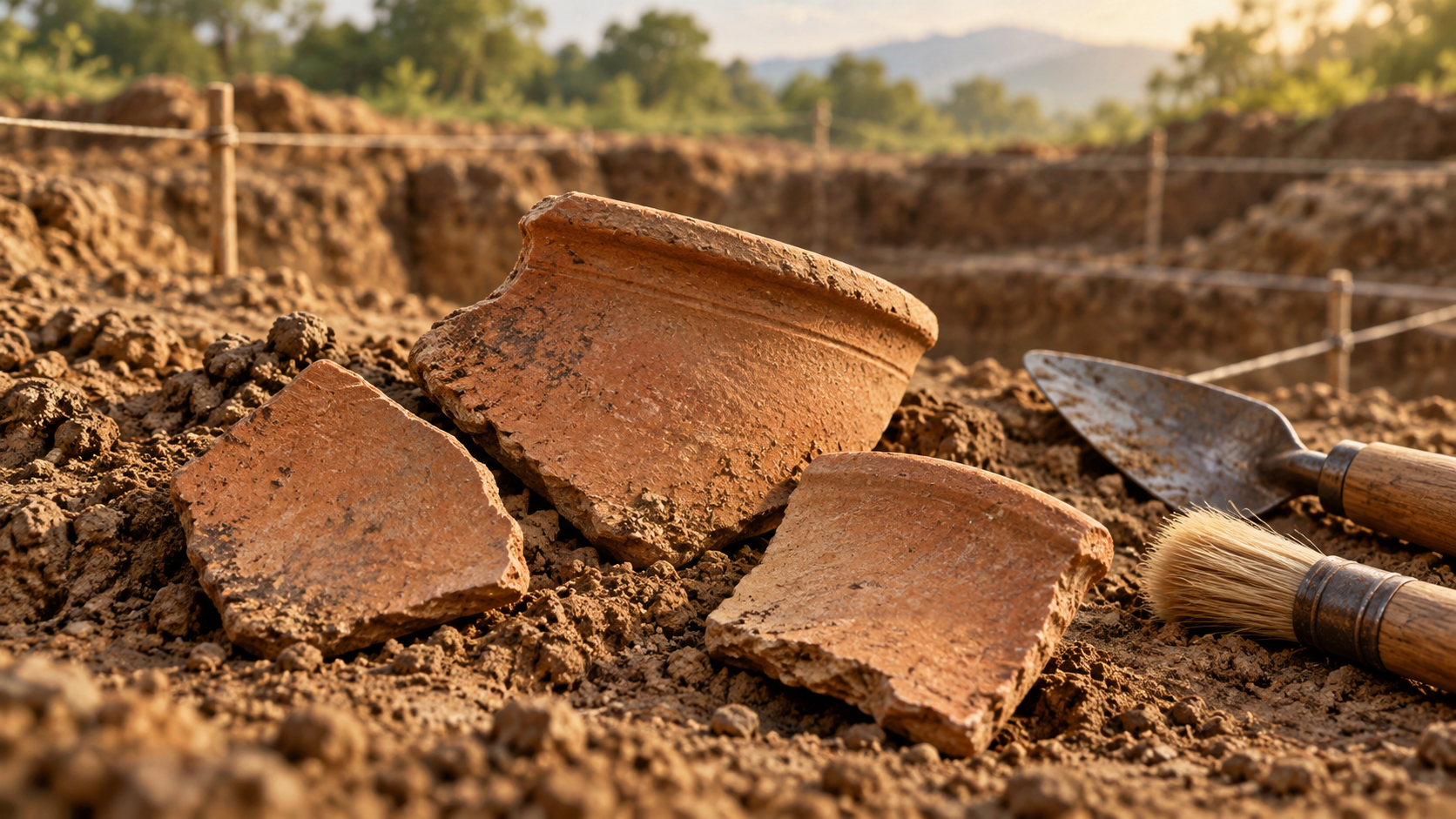
A broken piece of pottery might seem like an unlikely starting point for exploring history. Yet archaeology asks us to look closely at ordinary things and the places where they survive.
The first question is simple: where was it found?
The importance of context
An object’s archaeological value includes its relationship to everything around it. Its position, the soil surrounding it, and nearby objects or structures form part of its context.
Imagine two similar pottery fragments. One is recorded beside an ancient hearth; the other has been moved into a modern pile of rubble. They may look alike, but the evidence available for interpreting them is different.
This is why careful recording matters as much as discovery.
Reading the ground
During excavation, archaeologists document changes in soil and the positions of finds. These layers, called strata, can help establish the sequence of activity at a site.
In an undisturbed sequence, lower layers generally formed before those above them. But a site is rarely a perfectly ordered stack. Later pits, construction and natural processes can disturb earlier deposits. Understanding those changes is part of the investigation.
From objects to people
Archaeology studies past people through the material traces they left behind. A fragment becomes more meaningful when considered alongside other evidence.
What activities took place here? How did people use this space? Did its purpose change over time?
A single find may not answer these questions. Its contribution comes from being part of a carefully documented pattern.
Looking beyond the spectacular
History survives in more than grand monuments and exceptional discoveries. It also survives in damaged, discarded and everyday things.
The next time you see a pottery fragment in a museum, consider the information that may accompany it: its location, its surroundings and its relationship to other finds.
The object is only one part of the story. The connections help us read the rest.